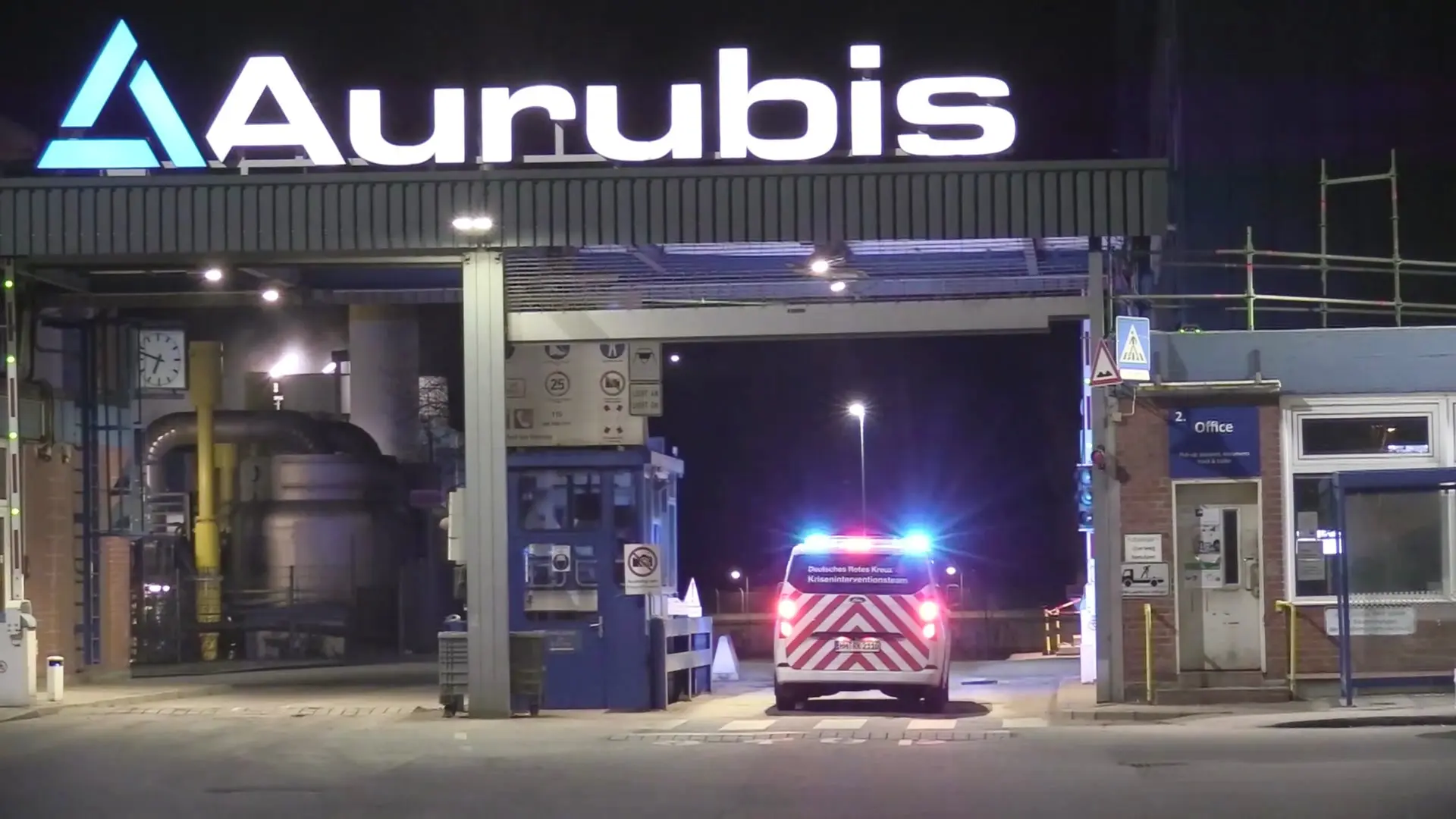
Worker Dies in Aurubis Slag Fire: Tragic Accident Prompts Deep Investigation into Safety Culture
The industrial landscape of Hamburg has been shaken by a profound tragedy, as a 42-year-old forklift driver lost his life in a devastating slag fire at the copper producer Aurubis. The incident, which occurred late on a Friday night, has sent shockwaves through the community and prompted a thorough investigation by authorities. This fatal Aurubis Unfall is not an isolated event, however, as it comes on the heels of another severe accident just days prior, and adds to a troubling history of workplace fatalities and serious injuries at the company, raising critical questions about safety protocols in heavy industry.
A Fiery Tragedy: The Fatal Forklift Accident
The latest tragedy unfolded around 11 p.m. on a recent Friday night within the copper production area of the Aurubis plant in Hamburg. Eyewitness reports and preliminary investigations indicate that the 42-year-old forklift operator was working near a boiler when hot slag, a molten byproduct of the copper smelting process, unexpectedly fell onto his vehicle. The extreme heat of the slag instantly ignited the forklift, leading to a violent explosion. The impact and subsequent fire trapped the worker, who tragically succumbed to his injuries. Another employee sustained minor injuries in the chaotic aftermath.
Aurubis AG, one of the world's leading copper producers, swiftly issued a statement expressing its deep sorrow and condolences. Toralf Haag, CEO of Aurubis, conveyed the company's "deepest sympathy" to the family and friends of the deceased, as well as to all those affected by the incident. He assured the public that Aurubis is cooperating fully with the investigating authorities, specifically the Landeskriminalamt (State Criminal Police Office), to conduct a comprehensive and detailed inquiry into the exact circumstances leading to this catastrophic event. The company's commitment to transparency and a thorough understanding of the incident's causes will be paramount as the investigation progresses.
Not an Isolated Event: A Preceding Near-Fatal Accident
The shock of the fatal slag fire was intensified by the revelation that it was the second serious workplace incident at Aurubis within a single week. Just six days prior, on the evening of February 28th, another employee suffered life-threatening injuries in a separate accident at Aurubis's "Werk Ost" facility. According to police reports, a 56-year-old worker became trapped by a crane while working on a crane runway. He required emergency surgery and was in critical condition, reportedly still receiving hospital treatment weeks later.
The proximity of these two severe incidents — one fatal, one near-fatal — has significantly heightened concerns regarding workplace safety at the Aurubis facilities. It underscores the inherent risks associated with heavy industrial operations, but also prompts urgent questions about whether existing safety measures, risk assessments, and emergency protocols are sufficiently robust. The concurrent investigations into both incidents are crucial for identifying any systemic failures or operational oversights that may have contributed to these profound workplace tragedies. This sequence of events has undoubtedly placed Aurubis under immense scrutiny, as detailed in our related article:
Aurubis Faces Scrutiny After Fatal Forklift Crash and Prior Serious Accident.
A Troubling Pattern: Aurubis's Safety Record Under Scrutiny
While the recent Aurubis Unfall incidents are devastating in their own right, they also unfortunately form part of a more concerning pattern. A review of the company's safety record reveals a series of serious and often fatal workplace accidents over the past year, painting a worrying picture for employee well-being in its heavy industrial environment.
* **May 2023:** A tragic incident saw three workers, aged 24, 49, and 53, lose their lives due to escaping nitrogen gas. This incident highlighted the extreme dangers posed by industrial gases and the critical importance of atmospheric monitoring and confined space safety.
* **August 2023:** A 53-year-old worker sustained severe injuries after being crushed by a moving crane hook at an alarming height of 25 meters. This accident underscored the perils associated with heavy lifting equipment and working at elevated levels.
* **July (presumably 2023):** An employee of an external contractor suffered severe head injuries during loading operations and later succumbed to his injuries in the hospital. This incident highlights the need for stringent safety standards that extend to all personnel on site, including third-party workers.
These multiple fatalities and life-altering injuries within a relatively short period raise serious questions about the overall safety culture, risk management practices, and operational oversight at Aurubis. While accidents can occur in any industrial setting, the frequency and severity of these incidents at Aurubis demand a thorough and independent review of its safety protocols, training programs, and equipment maintenance regimes. For more insights into these past events, read:
Aurubis Safety Record: Multiple Tragedies Hit Copper Manufacturer.
The Imperative of Industrial Workplace Safety: Lessons from the Aurubis Unfall
The recent Aurubis Unfall involving the slag fire, alongside the preceding crane accident and the string of prior tragedies, serves as a stark reminder of the non-negotiable importance of workplace safety, particularly in hazardous heavy industries. While investigations are ongoing, these incidents offer critical lessons for all industrial operations.
Key aspects of robust industrial workplace safety that need continuous reinforcement include:
*
Comprehensive Risk Assessments: Regular and detailed identification of potential hazards, followed by the implementation of effective control measures. This includes specific risks associated with molten materials, heavy machinery, chemical processes, and working at height.
*
Strict Safety Protocols and Training: Developing clear, enforceable safety procedures for every task, and ensuring all employees, including temporary staff and contractors, receive thorough and regular training. This training must cover emergency response, equipment operation, and hazard recognition.
*
Preventative Equipment Maintenance and Inspection: Implementing rigorous maintenance schedules for all machinery, including forklifts, cranes, and boilers, to prevent mechanical failures. Regular safety inspections are crucial.
*
Effective Emergency Response Planning: Establishing clear emergency procedures, including evacuation routes, first-aid stations, and communication protocols. Regular drills are essential to ensure employees know how to react in a crisis.
*
Cultivating a Strong Safety Culture: Encouraging open communication where employees feel empowered to report near-misses, hazards, or concerns without fear of reprisal. A proactive approach to safety from management down to every worker is vital.
*
Regulatory Oversight and Enforcement: The role of independent bodies in investigating accidents, enforcing safety standards, and levying penalties where negligence is found is paramount for accountability and deterrence.
*
Contractor Safety Management: Ensuring that external firms and their employees working on site adhere to the same high safety standards as permanent staff, including orientation, training, and supervision.
The human cost of industrial accidents is immeasurable, and each Aurubis Unfall underscores the profound impact on families, colleagues, and the wider community. It is a powerful call to action for all stakeholders to prioritize safety above all else, ensuring that the relentless pursuit of production never comes at the expense of human life and well-being.
The tragic death of the forklift driver at Aurubis and the prior serious incidents represent a sobering moment for the industrial sector. As investigations proceed, the focus must extend beyond identifying immediate causes to scrutinizing the underlying safety culture and systemic practices. It is imperative that Aurubis, alongside regulatory authorities, implements fundamental changes and strengthens safety measures to prevent such devastating events from recurring. The memory of those lost and injured demands a unwavering commitment to a safer future in heavy industry, ensuring that no more lives are tragically cut short by preventable accidents.